
Every index, one list.
arXiv, Crossref, OpenAlex, Wikipedia, the Internet Archive, and the web, in one search.
Pelorus Search runs one query on the research indexes and the web engines at once, merges what comes back, and puts the papers and pages more than one source found at the top. For researchers and grad students who would rather read than re-run the same search six times.

iPhone iPad Mac Winter 2026


One engine is one company's answer.
A single search engine is one company's view of the web, ranked by that company's rules and its advertising priorities. Ask Google and Bing the same question and you get two different lists. The research indexes see a different web again.
A few pages show up on more than one list. Those are the interesting ones. When more than one source finds the same page on its own, it's usually the page you wanted. Pelorus puts it first.
Every engine, one list.
Unified Search merges the results of the engines you turned on, drops the duplicates, and puts the pages more than one engine found on its own at the top. That's what holds up: found by several, not picked by one.
Fourteen engines, including Google, Bing, Brave, DuckDuckGo, Wikipedia, the Internet Archive, and academic and technical sources. Or add your own.
Swipe between engine cards to compare what each one found, or run All Engines for one card per engine, side by side.
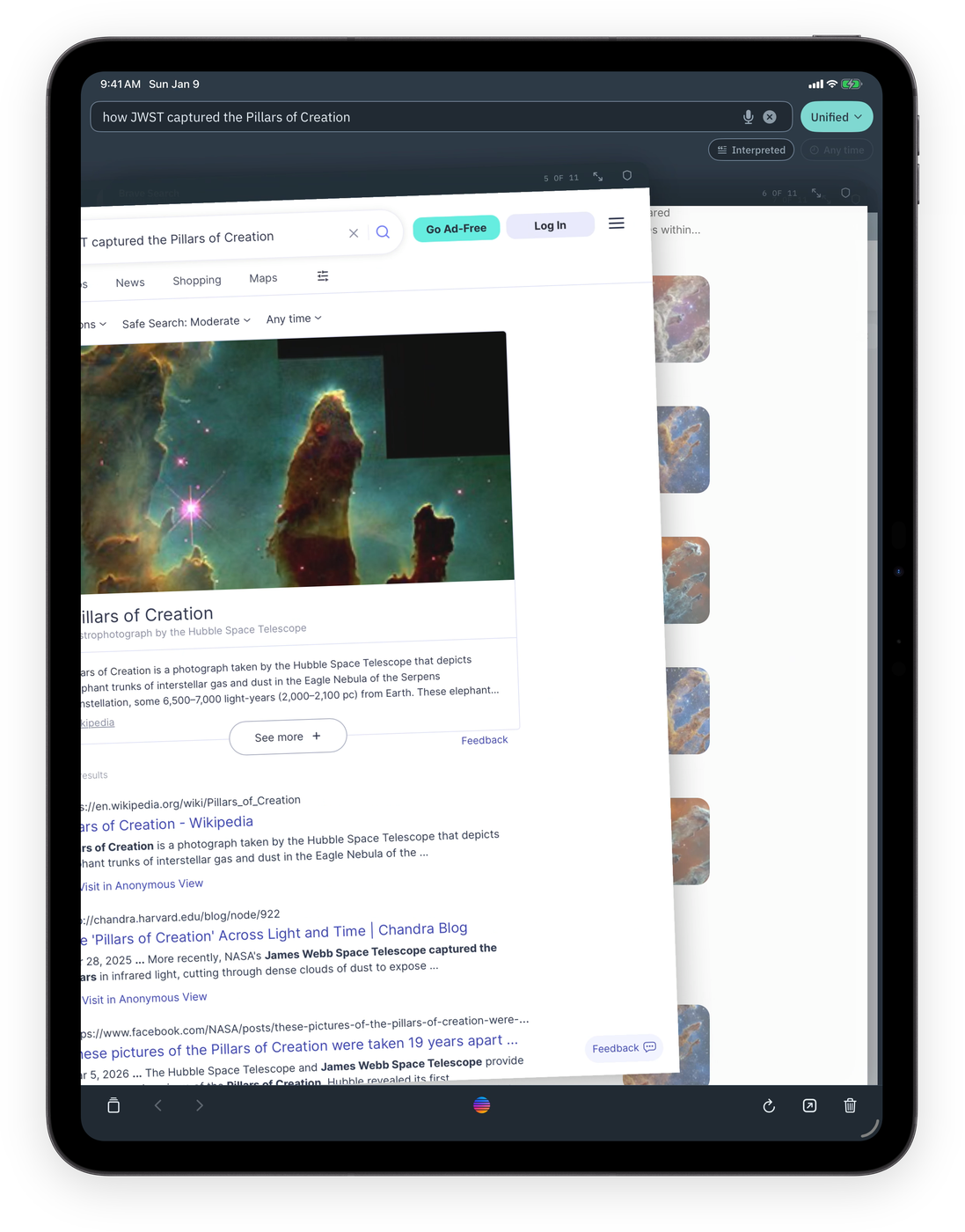

The research indexes, beside the web.
arXiv, Crossref, and OpenAlex each run as their own card. A paper one of them shares with a web engine counts as real agreement, so the work several sources point to rises to the top of the list.
Wikipedia runs as its own card too and adds its pages to Unified Search. The Internet Archive stays on its own card: its items carry no identifier that web results also carry, and Pelorus won't show agreement that isn't there.
Run All Engines for one card per source, side by side, or swipe between them.
- arXiv.
- Preprints in physics, mathematics, computer science, and more, as their own card.
- Crossref.
- Published articles by their registered metadata, as their own card.
- OpenAlex.
- An open index of scholarly works, as its own card. Use your own OpenAlex key if you have one.
- Wikipedia and the Internet Archive.
- Background and primary material, each on its own card.
Results you can work with.
Pelorus Insights.
Facts about your search. What every engine agreed on. What only one engine found. Where they disagreed most. Whether one website is quietly taking over the top of your list.


Made for long articles.
Open a long article and read it the way you want, or put the phone down and let it read to you.
Tap Reader on any page and the clutter falls away. What's left is the article, set how you like it: your font, your line spacing, your margins, images preserved or hidden. You can also dim the page without dimming your screen.
When you'd rather listen, pick a voice, hear it before you choose, set the speed. The words highlight as it goes. Lock the phone and it keeps reading, with the controls right there on your lock screen. Four natural voices of Pelorus's own, plus every voice on your iPhone, and all of them speak entirely on your device.


Running every engine at once, the research indexes beyond any two, and Pelorus Insights are part of Pelorus Unlimited, a one-time purchase. The free app searches any two engines at once, and Reader and Read Aloud are free.


One search engine is one company's answer.
Pelorus asks them all, then shows you which results hold up.
No subscriptions. No ads. No account. And a browser that forgets everything when you tap Erase.

Free to download. Unlimited is a one-time purchase. Requires iOS 17 or later.